The store will not work correctly when cookies are disabled.
We use cookies to make your experience better.To comply with the new e-Privacy directive, we need to ask for your consent to set the cookies.Learn more.
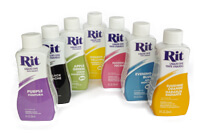
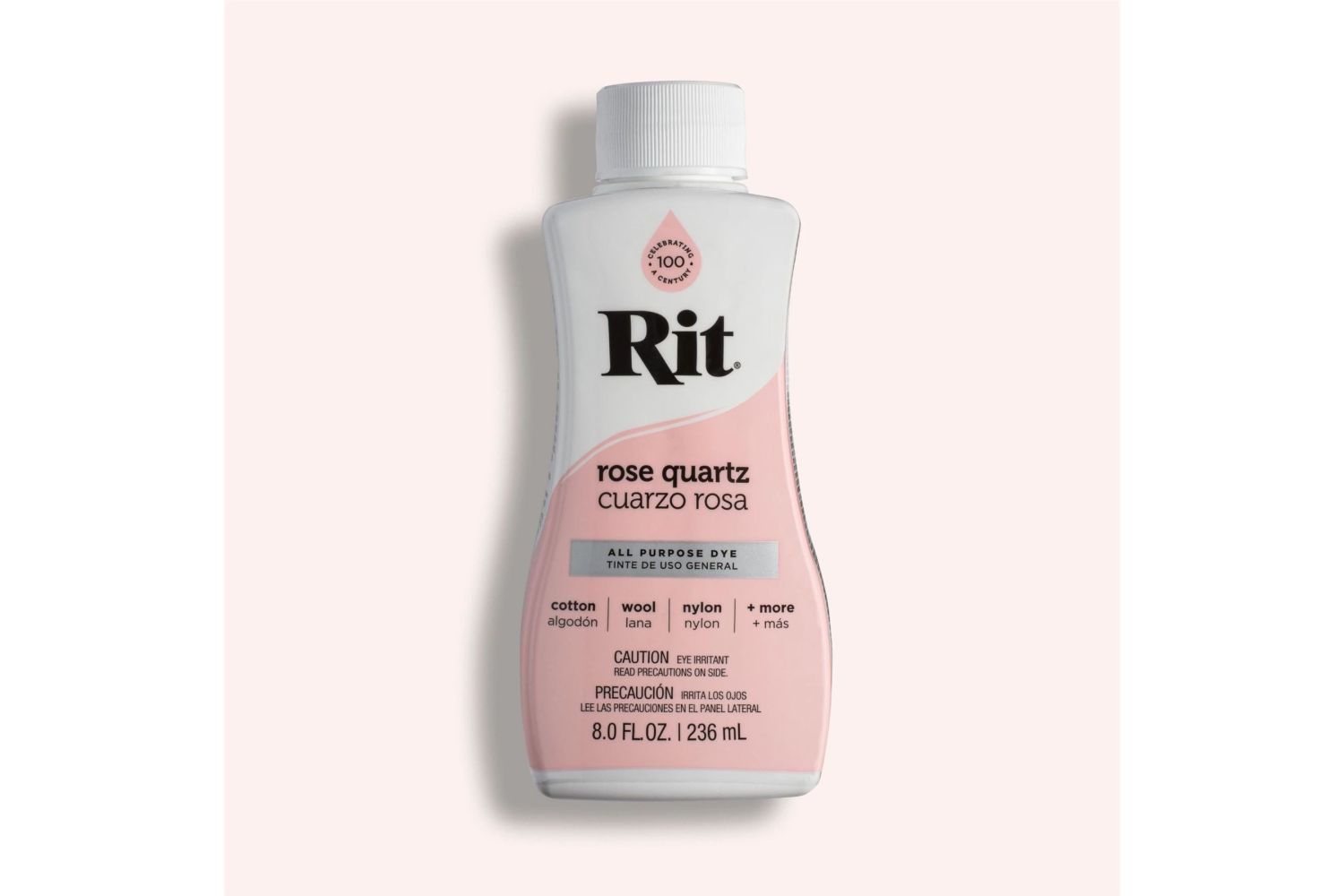
Rit Dye - Use these liquid dyes to dye your own fabric
Here's What Rit Will & Will Not Dye
Choose Your Fabric & Materials
Rit works best on many natural, washable fabrics and materials, such as ...100% cotton, linen, silk, wool, ramie
Fiber blends with at least 60% cotton or other dyeable fiber
(Blends will tint evenly but will not achieve full colour)
Nylon-based plastic such as those found in buttons, fasteners, golf balls & lacrosse sticks
Natural materials such as wood, wicker, paper, feathers and cork
... but there are fabrics and materials that will NOT accept dye such as ...
100% polyester, acrylic, acetate, fiberglass, spandex and metallic fibers
Fabrics with rubber backing (bath mats or throw rugs)
Fabrics with special finishes such as water repellents
Fabrics with bleach damage or extensive staining
Fabrics washable only in cold water or labeled "dry clean only"
Polyethylene plastics such as golf discs
Polycarbonate plastics such as eyeglass frames
If you are in doubt as to whether your fabric will accept dye, test a swatch.
Achieving True Color
Always follow manufacturer's care instructions for your fabric as well as Rit Dye package or bottle instructions. Remove stains on fabric with Rit Super Stain Remover or Rit Color Remover before dyeing to achieve uniform colour results.
Choose your colours.
You can use one, two, three or as many colours as you like on one garment. However, if you use more than one colour, it's usually best to start with the lightest colour.
Be sure to use enough dye for the weight or size of the project. For example, for a pound of dry fabric (about 3 yards), use one package of Rit powder or 1/2 bottle of Rit liquid in 3 gallons of water.
Dissolve powder dye thoroughly in 2 cups of very hot water first to avoid dye spotting. Stir dissolved powder dye or well-shaken liquid dye into dye bath until evenly dispersed. Never pour liquid or powder dye directly on fabric.
For the deepest colour, use a water temperature of 140 Degrees Fahrenheit/60 Degrees Celcius. Note: If tap water is not hot enough, heat water in a tea kettle or in the microwave.
When dyeing 1 pound of dry fabric in dark or bright colours such as Black, Dark Brown, Cocoa Brown, Navy, Purple, Wine, and Dark Green, use double the amount of dye (2 packages of Rit powder or 1 bottle of Rit liquid) in 3 gallons of water.
For more intense colour when dyeing fabrics containing cotton, rayon, ramie, or linen, add 1 cup salt to the dyebath. When dyeing nylon, silk and wool, add 1 cup white vinegar to the dyebath. If possible delay adding the salt or vinegar until 5 minutes after the fabric has been in the dye bath. The delay will help to promote level dyeing.
Add 1 Tablespoon laundry detergent to all dye baths to help promote level dyeing.
The longer the garment is immersed in the dye bath, the deeper the resulting colour. Items can remain in the dye bath for up to 1 hour as long as the water remains hot. You'll also have to make sure the item receives constant agitation or stirring.
Garments will also look darker when wet and prior to washing.
When you remove clothes from dye bath, rinse in warm, then cool water until water runs clear. (Warm water helps to rinse off surface dye more effectively.)
Wash your fabric/clothes in warm water with mild detergent and then rinse thoroughly in cool water. Machine dry or hang dry.
Fiber Content Affects Dye Color
Garments and fabrics will take dye differently due to their fiber content and weight. With the new Rit dye formula, these swatches dyed in Scarlet are brighter, more vibrant and show improved colour continuity.


 Compare
 Wishlist